
Russian President Vladimir Putin is actively working to de-escalate the escalating crisis in the Gulf, engaging with regional leaders following Iran's retaliatory strikes on US facilities after joint US-Israeli strikes against Iran.

Iran's Islamic Revolutionary Guard Corps (IRGC) on Saturday (local time) announced the closure of the Strait of Hormuz "until further notice," stating that the strategic waterway would remain shut until the United States ends its "interference" in the West Asia region, Press TV reported.

Prime Minister Narendra Modi spoke with Israeli Prime Minister Benjamin Netanyahu to discuss the escalating situation in West Asia, conveying India's concerns and emphasizing the importance of civilian safety. The conversation follows recent attacks and heightened tensions in the region.

Indian benchmark indices, Sensex and Nifty, experienced a significant downturn as escalating tensions in West Asia led to a sharp surge in crude oil prices, coupled with fresh foreign fund outflows and a weakening rupee.

Indian benchmark indices Sensex and Nifty extended their losses for the fourth consecutive session, with the Sensex declining 363.66 points and the Nifty dipping 126.65 points, primarily due to a sharp jump in Brent crude oil prices to USD 98.32 per barrel amid escalating tensions in West Asia.

India's remittance inflows have remained robust despite the West Asia conflict, driven by precautionary transfers and diversification of remittance sources, with bankers expecting continued stability for the year.

National Conference President Farooq Abdullah has voiced his concern over the escalating violence in West Asia, urging all parties to prioritise dialogue and diplomacy to de-escalate tensions and protect civilian lives.
Indian benchmark indices Sensex and Nifty experienced a significant slump in early trade, driven by escalating tensions in West Asia and a sharp rise in crude oil prices, alongside a bearish trend in other Asian markets.
Crude oil prices reached a new record high in futures trade, both domestically and internationally, as escalating military tensions between the US and Iran in West Asia continue to fuel market volatility. Diplomatic efforts concerning the Strait of Hormuz are being closely watched for potential price stabilisation.

An Indian national was killed in a missile attack on Riyadh, bringing the total number of Indian fatalities in the West Asia conflict to six. The Indian embassy in Riyadh has expressed condolences and is providing assistance to the family.

Indian benchmark indices, Sensex and Nifty, extended their losses for a second consecutive day, primarily due to HDFC Bank's disappointing quarterly earnings and escalating tensions in West Asia, coupled with persistent foreign fund outflows.

Indian benchmark indices, Sensex and Nifty, recorded their fifth consecutive day of losses, driven by investor caution over rising oil prices due to West Asia tensions and renewed concerns regarding US trade tariffs.

Indian benchmark indices Sensex and Nifty closed largely flat on Monday, recovering from early losses, as escalating tensions in West Asia and a sharp rally in crude oil prices weighed on investor sentiment, despite resilience in IT and consumer durables stocks.

Indian stock markets this week will be primarily influenced by a series of corporate Q1 earnings, the evolving geopolitical situation in West Asia, and fluctuations in crude oil prices, according to market analysts.

Indian benchmark indices Sensex and Nifty saw a significant rebound in early trade, driven by a sharp decline in crude oil prices and easing geopolitical tensions in the West Asia, which improved market sentiment and reduced inflation fears. Track Sensex, Nifty on July 27.

External Affairs Minister S Jaishankar spoke with his Portuguese counterpart Paulo Rangel to discuss the West Asia conflict and explore ways to enhance bilateral cooperation.

Prime Minister Narendra Modi spoke with Iranian President Masoud Pezeshkian to discuss the escalating tensions in West Asia, emphasising the safety of Indian nationals and the need for regional stability through dialogue and diplomacy.
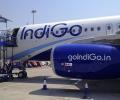
IndiGo, India's largest airline, reported a net loss of Rs 238 crore for the June quarter, primarily attributed to a significant surge in fuel prices and operational constraints stemming from the West Asia conflict.

Prime Minister Narendra Modi and French President Emmanuel Macron discussed the escalating situation in West Asia, emphasising the need for dialogue and diplomacy to restore peace and stability in the region.

The Sri Lankan government attributes the sharp depreciation of the rupee against the US dollar to the ongoing conflict in West Asia, citing increased costs for essential imports like gas, fertiliser, and oil.

Prime Minister Narendra Modi and French President Emmanuel Macron discussed the escalating situation in West Asia, emphasising the importance of dialogue and diplomacy to restore peace and stability in the region.

Union Finance Minister Nirmala Sitharaman has warned that the ongoing West Asia crisis is not merely a geopolitical issue but will directly lead to higher fuel costs for common people and businesses, impacting shipping, input availability, and export orders.

Sri Lanka has established emergency hotlines and is closely monitoring the situation in West Asia following escalating tensions, urging restraint and de-escalation from all parties involved.

Indian benchmark indices Sensex and Nifty experienced a significant slump in early trade, mirroring weak global trends, as escalating tensions in West Asia, particularly a drone attack on the UAE's Barakah nuclear facility, pushed crude oil prices higher. Track Sensex, Nifty50 movement and key market drivers for May 18, 2026.

Escalating geopolitical tensions in West Asia are beginning to disrupt India's automotive supply chain, leading to rising commodity prices, logistics bottlenecks, material shortages, and pressure on consumer demand, with two-wheeler makers already raising prices.

India on Tuesday expressed deep concern over the escalating conflict in Iran and the Gulf region, urging all sides to exercise restraint and prioritise civilian safety.
Sri Lanka has established emergency hotlines and is in close contact with its diplomatic missions in West Asia following escalating tensions in the region. The country is also preparing its airports for potential flight diversions and emergencies.

External Affairs Minister S Jaishankar will address the Lok Sabha on the situation in West Asia, as Parliament reconvenes for the Budget session amidst ongoing regional tensions.

Prime Minister Narendra Modi has expressed deep concern over the escalating situation in West Asia, emphasising the need for dialogue and diplomacy to resolve disputes. India is closely monitoring developments to ensure the safety of its citizens in the region.

The Indian stock market is poised for a volatile week, influenced by the Reserve Bank of India's monetary policy decision, crucial global macroeconomic data, and the escalating geopolitical tensions in West Asia, according to market analysts.

RBI Governor Sanjay Malhotra stated that the central bank is closely monitoring whether the supply shock from the West Asia conflict will lead to a generalised price rise, potentially necessitating monetary policy action.

Pakistan's Prime Minister Shehbaz Sharif has engaged in extensive diplomatic efforts to de-escalate the conflict in West Asia, offering to host talks between the US and Iran and engaging with leaders from Saudi Arabia, Qatar, Malaysia, the UK, China, and the European Union.

Amid escalating tensions in West Asia, the Indian government has established a control room to provide crucial support and assistance to the nearly one crore Indian citizens residing in the region.

Marine war-risk premiums for West Asian shipping routes, particularly the Red Sea corridor, have surged by as much as 200 per cent due to renewed geopolitical tensions, with some high-risk transits seeing increases of over 1,000 per cent, according to industry brokers.
Pakistan is hosting a quadrilateral summit of foreign ministers from Saudi Arabia, Egypt, and Turkiye to discuss the conflict in West Asia and explore avenues for peace. The summit includes discussions on regional developments and meetings with Prime Minister Shehbaz Sharif.
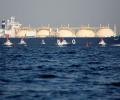
Iranian Deputy Foreign Minister Kazem Gharibabadi has urged India to take the lead in bringing peace to West Asia, highlighting the UAE's role in stalling BRICS consensus on the conflict. Gharibabadi also discussed a new framework with Oman for merchant vessels passing through the Strait of Hormuz.

India's pharmaceutical industry is experiencing increased bulk drug prices, particularly for APIs from China, following the escalation of the West Asia crisis in March. While current inventories provide a temporary buffer, concerns are mounting over the availability of key solvents and feedstocks, potentially leading to manufacturing disruptions and shortages in specific drug categories.

The escalating crisis in West Asia and its impact on the global energy supply chain are expected to dominate deliberations at a two-day meeting of BRICS foreign ministers to be hosted by India.

Prime Minister Narendra Modi convened a meeting with senior ministers to assess the impact of the evolving situation in West Asia on India's crude oil, gas, petroleum, power, and fertiliser sectors, focusing on ensuring uninterrupted supply and stable logistics.
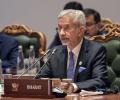
India has expressed serious concerns about the West Asia crisis and its potential impact on energy supplies and maritime stability, urging BRICS nations to find practical solutions to geopolitical challenges and unilateral sanctions.
